


Aug 24, 2025

We field calls every day from people standing on the edge of the map. A geologist planning a two-month survey in the Alaskan wilderness. A logistics manager deploying a construction crew to a remote corner of Patagonia. A family in Florida methodically preparing their hurricane go-bag. They all start with the same question, a question that carries the weight of a $2,000 decision:
"Which satellite phone should I buy?"
And more often than you'd think, our answer is a quiet bombshell: "You shouldn't. You should rent"
This usually stops the conversation cold. It’s a record-scratch moment. We're a store that sells this equipment; our shelves are lined with the latest and greatest satellite communicators. Why would we tell you not to buy one?
The answer is simple, and it’s the creed we operate by: field-tested solutions always beat theoretical ones. Our mission isn't just to move boxes. It's to equip you for your mission. We'd rather earn your trust by giving you the right advice for your specific operation than sell you a premium device that’s going to collect dust in a Pelican case for 50 weeks a year.
For the overwhelming majority of people we talk to, renting isn't a compromise. It's the single smartest strategic decision you can make. It’s the difference between owning a liability and commanding a capability.
The Strategic Advantage: Why Smart Operators Rent
If you live and breathe off-grid—if your boots have more miles on them than your car—then buying your own gear is a solid, long-term investment. You are the exception. For the vast majority of trips, commercial projects, and emergency plans, the logic of renting is undeniable. It's faster, more economical, and infinitely more practical. It's about having access to an arsenal, not just owning one rifle.
The Financial Calculus: A Tale of Two Budgets
On the surface, the math seems simple. A satellite phone costs, say, $1,500. A rental is a few hundred. If you use it enough, buying pays for itself, right? This is a dangerous oversimplification. The sticker price is just the cover charge; the total cost of ownership (TCO) is where the real expense hides.
Let's break down the true cost of owning an Iridium 9575 Extreme—a fantastic, top-tier device—versus renting it for a typical two-week annual trip over three years.
| Cost Component | Owning the Iridium 9575 Extreme | Renting the Iridium 9575 Extreme |
| Year 1 Initial Outlay | ||
| Device Purchase | $1,595 | $0 |
| Activation Fee | $50 | $0 |
| Annual Plan (Minimum) | $600 | $0 |
| Year 1 Rental Cost | ||
| 2-Week Rental Fee | $0 | $280 |
| Airtime (60 mins) | Included in plan | $90 |
| Year 1 Total | $2,245 | $370 |
| Year 2 Ongoing Costs | ||
| Annual Plan Renewal | $600 | $0 |
| Battery Conditioning/Health | Time/Effort | Included |
| Firmware Updates | Time/Effort | Included |
| Year 2 Rental Cost | ||
| 2-Week Rental Fee | $0 | $280 |
| Airtime (60 mins) | Included in plan | $90 |
| Year 2 Total (Cumulative) | $2,845 | $740 |
| Year 3 Ongoing Costs | ||
| Annual Plan Renewal | $600 | $0 |
| Potential Battery Replacement | $150 | Included |
| Year 3 Rental Cost | ||
| 2-Week Rental Fee | $0 | $280 |
| Airtime (60 mins) | Included in plan | $90 |
| 3-Year Grand Total | $3,595 | $1,110 |
This isn't an apples-to-apples comparison; it's a reality check. After three years, the renter has spent less than a third of the owner's total cost and has had zero responsibility for maintenance, updates, or battery health. For the owner, that $1,595 phone was actually a $3,595 commitment. The question shifts from "Can I afford the phone?" to "Can my budget sustain the service?" For a single annual trip, the math is overwhelmingly in favor of renting.
The Mission-Specific Arsenal: The Right Tool for the Right Job
Your communication needs are not static; they are dictated by the mission. The Iridium 9555 that’s perfect for a solo hike in the Rockies is dangerously inadequate for coordinating a disaster response team in the Caribbean. Ownership locks you into a single solution. Renting gives you the keys to the entire armory.
- For the Lone Adventurer: You're climbing, trekking, or fishing far from cell towers. Your needs are simple: a reliable way to check in and a panic button if things go sideways. Buying a full-blown sat phone is overkill. A compact satellite messenger rental like a Bivy Stick or Garmin inReach is lighter, cheaper, and designed specifically for two-way texting and SOS. It's the scalpel, not the sledgehammer.
- For the Remote Professional: You're a journalist on assignment or an engineer at a remote site. You need more than just voice; you need data. Email, light web browsing, and weather updates are critical. The Iridium GO! exec is a game-changer. It turns your smartphone into a satellite-connected device, creating a portable Wi-Fi hotspot. Renting a GO! exec for a project gives you a mobile office anywhere on the planet without the five-figure cost of a permanent broadband terminal.
- For the Team Leader: You're managing a convoy, a film crew, or a search and rescue squad. One-to-one phone calls are inefficient and chaotic. You need one-to-many communication. This is a job for Push-To-Talk (PTT). Renting a set of ICOM IC-SAT100 PTT Radios creates a private, global radio network for your team. Press a button, and everyone hears you instantly, whether they’re over the next ridge or on the next continent. Trying to achieve this with individual sat phones would be a logistical and financial nightmare.
The 'Grab-and-Go' Guarantee: Zero Maintenance, 100% Ready
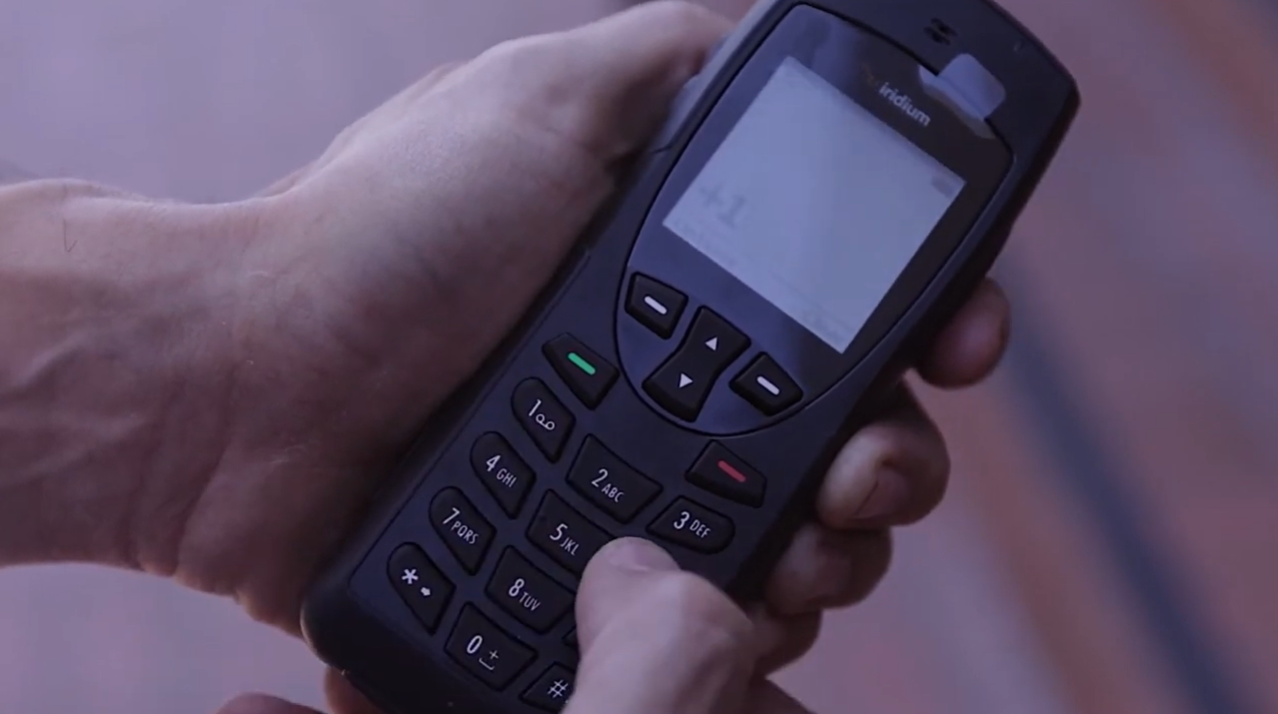
A satellite phone is a lifeline, and a lifeline you haven't tested is just a piece of plastic. Batteries require periodic conditioning to hold a full charge. Firmware must be updated to patch security flaws and improve network performance. Service plans need to be activated and managed.
When you own the gear, that's your job. It's one more thing on a long pre-deployment checklist. Did you charge it three months ago? Is the plan still active? Do you remember how to use it?
When you rent from us, it's our obsession.
Our process is meticulous because we know the stakes. Every rental kit that leaves our facility has been through a multi-point inspection. The device is fully charged. The battery health is verified. The firmware is the latest version. The service is active and tested with a live call. It's all packed in a rugged, waterproof case with all necessary accessories. Your rental arrives 100% field-ready, guaranteed to work the moment it lands on your doorstep. That isn't just convenience; it's mission assurance.
Navigating the Technological Horizon
The world of satellite communication is in the middle of a revolution. Low-Earth Orbit (LEO) constellations like Starlink are changing the data game. Devices are getting smaller, faster, and more capable every year. The Starlink Mini, for example, offers high-speed internet from a device the size of a laptop, something that was science fiction just a few years ago.
Buying a top-of-the-line device today means you're locking yourself into yesterday's technology tomorrow. Renting ensures you always have access to the most current and appropriate technology for your needs. You can try out a new device like the Starlink Mini for a specific trip to see if it fits your workflow, without committing thousands to a system that might be superseded in 18 months.
The Definitive Rental Guide: Matching the Gear to the Mission
We've seen it all. We've equipped scientific expeditions to Antarctica, film crews in the Amazon, and emergency response teams after Level 5 hurricanes. This experience has taught us one thing: the specific hardware matters. Here’s a no-fluff breakdown of what works best in the real world.
| Rental Equipment | Best For | Key Feature & Field Notes |
| Iridium 9555 Sat Phone | Hiking, Camping, Backup Comms, General Global Travel | The Workhorse. Simple, rugged, and utterly reliable global voice & text. It's not fancy, but it has never let us down. If you just need to make and receive calls anywhere on Earth, this is your tool. |
| Iridium 9575 Extreme | Lone Workers, Extreme Expeditions, High-Risk Environments | The Lifeline. Adds a programmable, one-touch SOS button and real-time GPS tracking to the 9555's platform. For organizations with a duty of care to their people in the field, this is the standard. |
| Inmarsat IsatPhone 2 | Budget-Conscious Travel (Excluding Polar Regions) | The Value Play. Excellent voice quality and reliability. Its network doesn't cover the extreme poles like Iridium, but for 95% of travelers, it's a superb and often more affordable choice. |
| Bivy Stick | Solo Hiking, Backcountry Skiing, Ultralight Adventures | The Messenger. A tiny device that pairs with your smartphone. Focuses on two-way texting, location sharing, and SOS. Perfect when every ounce counts and voice calls aren't a priority. |
| Iridium GO! exec | Remote Professionals, Small Teams, Sailors Needing Data | The Mobile Hotspot. Your portable satellite Wi-Fi bubble. Essential for sending emails, downloading GRIB files for weather routing, and light web use. A true force multiplier for remote productivity. |
| Iridium 9575 PTT Sat Phone | Team Coordination, Logistics, Disaster Response, Fleet Ops | The Command Unit. Instant, one-to-many global group communication. Forget dialing numbers; just push a button. In a crisis or complex operation, PTT is non-negotiable for maintaining situational awareness. |
| Starlink Mini w/Case | Remote Worksites, Field Offices, Basecamps | The Broadband Terminal. Delivers high-speed internet suitable for video calls, large file transfers, and supporting multiple users. Requires a clear view of the sky and is less portable than other options, but for data-intensive work, it's unmatched. |
The Exception to the Rule: When Buying Becomes the Smart Play
Is renting always the right answer? No. We'd be lying if we said otherwise. Our goal is to provide the right solution, and sometimes, that solution is ownership. The decision to buy should be as strategic and deliberate as the decision to rent. Here's who should be looking at a permanent addition to their gear locker.
- The High-Frequency User: Are you an overlander who spends two weekends a month off-grid? A bush pilot who flies over remote terrain daily? A sailor planning a multi-year circumnavigation? If you are "out there" more than you are "in here," the cost-benefit analysis flips. If you're using the gear more than 6-8 weeks per year, every year, the TCO of owning starts to make sense.
- The Institutional Requirement: Government agencies, large energy corporations, and global NGOs often have a mandate to own their critical communication assets. For them, having devices on-shelf, ready for immediate deployment without any lead time, is a matter of operational security and policy. The gear is a fixed asset, and the cost is part of the operational budget.
- The Long-Term, Static Deployment: If you're setting up a research station or a mining camp that will be operational for 3+ years, a permanent satellite internet installation (like a full-size Starlink or a V-SAT terminal) is the only logical choice. Here, the hardware is part of the infrastructure, just like a generator or a water tank.
- The Hybrid Strategist: Some of our most sophisticated clients use a hybrid model. They own a basic set of gear—perhaps a sat phone in each fleet vehicle—for day-to-day reliability. But when a special project comes up that requires PTT radios or a high-bandwidth data terminal, they rent that specialized equipment. This gives them the best of both worlds: daily readiness and access to mission-specific technology without the capital expenditure.
Your Downtime Is Our Problem to Solve
Renting isn't about borrowing a gadget. It's about outsourcing your communication readiness. It's about having a proven, tested, and guaranteed solution in your hands when you need it most. We've engineered our process to be dead simple, because in the field, simple is what survives.
- Talk To Us: Call our experts. Tell us where you're going, what you're doing, and what you're trying to achieve. We've done this thousands of times. We’ll cut through the noise and recommend the right gear.
- We Ship: You get a complete, field-ready kit delivered to your door. Open the case. Everything you need is there, charged and ready.
- You Communicate: Stay connected, coordinate your team, and operate with the confidence that comes from having a reliable safety net.
- Send It Back: When your mission is complete, put everything back in the box, slap on the prepaid return label we provided, and drop it off. Done.
If a solution doesn't work in the real world, under pressure, when everything else has failed, we don't recommend it. For thousands of our customers—from Fortune 500 companies to weekend adventurers—renting is the field-tested strategy that guarantees they are never, ever out of touch.
Got a trip, project, or emergency plan on the horizon? Don't guess what you need. Check out our rental options or give our experts a call. We’ll make sure you have the right gear to get the job done.
Frequently Asked Questions (FAQ)
1. What's the real difference between the Iridium and Inmarsat networks? The primary difference lies in their satellite architecture. Iridium uses a constellation of 66 Low-Earth Orbit (LEO) satellites that provide true pole-to-pole global coverage. This makes it the only choice for expeditions to extreme northern or southern latitudes. Inmarsat uses a smaller number of geostationary (GEO) satellites that orbit over the equator. This provides excellent coverage for the vast majority of the planet's landmass and oceans but has gaps in the polar regions. Inmarsat can sometimes offer slightly better voice quality due to the stationary nature of its satellites, but Iridium's complete coverage is its defining advantage.
2. Can I really get high-speed internet in the middle of nowhere? Yes, but it's important to define "high-speed." Devices like the Iridium GO! exec provide reliable data speeds around 22-88 Kbps—perfect for email, text-based web browsing, and downloading weather files, but not for streaming video. For true broadband speeds (50-150+ Mbps), you need a terminal like the Starlink Mini. This device can handle video calls, cloud data syncs, and team-wide usage, but it's larger, requires more power, and needs a completely unobstructed view of the sky. The right choice depends entirely on your data needs.
3. What happens if I damage or lose the rental equipment? We understand that field use is tough on gear. Our rental agreements include options for a "Peace of Mind" damage waiver. For a small additional fee, this covers most accidental damage to the equipment. It doesn't cover loss or theft, so you are responsible for the full replacement cost if the device is lost. We strongly recommend checking if your travel insurance or business insurance policy covers rental equipment.
4. How far in advance do I need to book a rental? We recommend booking your rental at least 1-2 weeks in advance of your departure date, especially during peak seasons like summer holidays or hurricane season (June-November). While we can often accommodate last-minute and overnight requests, booking in advance guarantees availability and gives you time to familiarize yourself with the equipment before you leave.
5. For a month-long trip, isn't it just cheaper to buy? Not necessarily. As our Total Cost of Ownership table shows, the initial purchase is only part of the expense. For a one-month trip, a rental (approx. $500-700 with airtime) is still significantly cheaper than buying a device ($1,500+) and activating a monthly or annual plan ($70/mo or $600/yr minimums). You would need to be planning several month-long trips over a few years before the purchasing math begins to look favorable. For a single, extended trip, renting remains the most economical option.
Recent Posts
- Why Rent a Sat Phone: The Field-Tested Secret to Staying Connected Off-Grid
- Built Like a Tank – The Starlink Performance Kit Arrives for Extreme Ops
- Old vs. New Starlink Terminals – What Buyers Need to Know
- Starlink High Performance Panel Installation Guide: A Complete Setup Tutorial
- Starlink Satellite Internet and Off-Grid Camping: The Ultimate Guide to Remote Wilderness Connectivity
- 6 Reasons to Consider a Satellite Phone After Hurricane Season 2024
- Hurricanes: A Harsh Reminder to Be Prepared
- 10 Solid Reasons to Consider EscapeZone's Faraday Protection Products
- Satellite Phone Store Offers Reliable Communication Amidst Nationwide Verizon Outage
- Protect Your Devices from the Unseen: Why You Should Invest in a Faraday Bag


